The Ticker Analysis
Noise Is Loud, But the Signal Is Clear
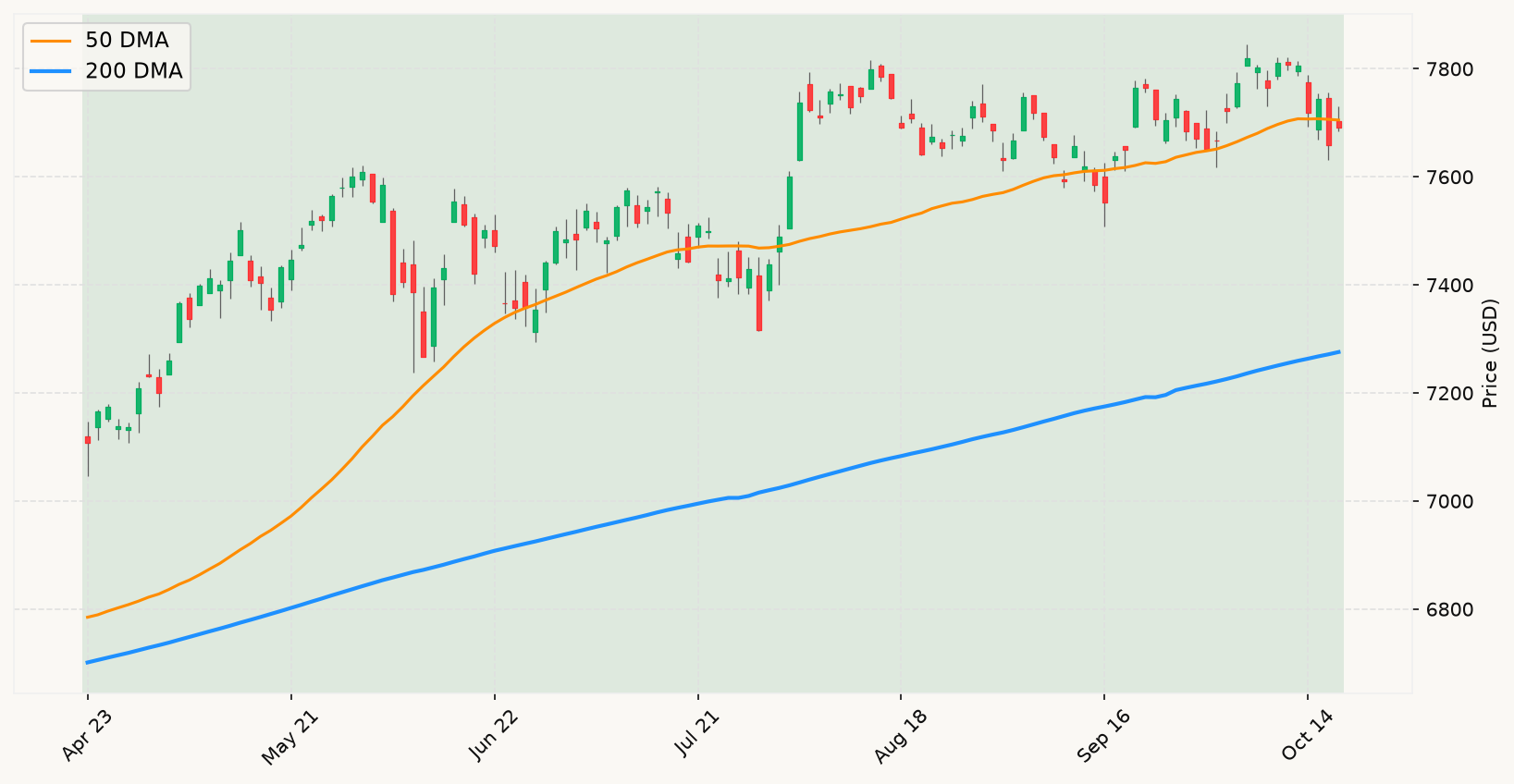
The noise is loud right now — AI spending fears, Brent near $110, a December Fed hike telegraphed by essentially every economist on the street. But the signal, by the only measure that actually matters for tactical positioning, is unambiguous: the market remains well above its primary trend line, the drawdown from the all-time high set just two weeks ago is minimal, and breadth held up enough for industrials and consumer names to offset the tech volatility. The burden of proof sits entirely on the bear case, and that burden is nowhere close to being met. Staying fully invested is not a guess — it's the framework-consistent response to the current data.
The AI debt anxiety narrative is the kind of story that sounds structural but behaves like sentiment. The mechanism — borrowing costs rising, capex returns uncertain, data-center bonds under pressure — is real enough on paper, but the market's response has been a sector rotation, not a broad-based deterioration. Chip stocks took a historically long losing streak and then bounced. The Dow barely flinched. When the biggest bears in a selloff are concentrated in the highest-multiple, most momentum-driven names, and the rest of the market absorbs it, that is not the gradual, grinding, broad-market decline that historically precedes recessionary bears. That grinding pattern is the tell. What we've seen instead is a fast, violent, narrative-driven correction in a single sector — exactly the type of move that the historical record says resolves quickly.
The monetary policy environment deserves the same clear-eyed assessment. Yes, the interest rate environment is hawkish — a December hike is the base case, and the Fed has been in tightening mode since earlier this year. But the 10-year/3-month spread is firmly positive, which matters: an inverted term structure has preceded every modern recession with meaningful lead time, and we don't have that. Employment conditions, by every available measure, remain healthy — no Sahm-style threshold breach, no sustained payroll deterioration. The oil shock from Hormuz tanker attacks is a legitimate inflation wildcard, but geopolitical supply shocks have historically been self-limiting in their economic impact unless they trigger a full recession via demand destruction. There's no sign of that yet in any leading indicator.
The earnings picture this week will matter at the margin for sentiment, but not for the framework. What Netflix, Meta, and Tesla report will move individual stocks and set the tone for tech multiples — but none of that changes the primary trend status or the recession probability. GE and GM beating estimates this morning is a quiet but useful data point: the real economy is not cracking under the weight of higher rates. For anyone tempted to use the AI fear cycle as justification for trimming equity exposure, the history of 22 documented correction episodes is a strong counterweight. The overwhelming majority of corrections — including the fast, frightening-looking ones — resolve without becoming prolonged bears, and every prolonged bear in the dataset coincided with a confirmed recession. Right now, the recession signal simply isn't there. MoreLess