The Ticker Analysis
Chip Rout Is Noise — Primary Trend Says Stay Invested
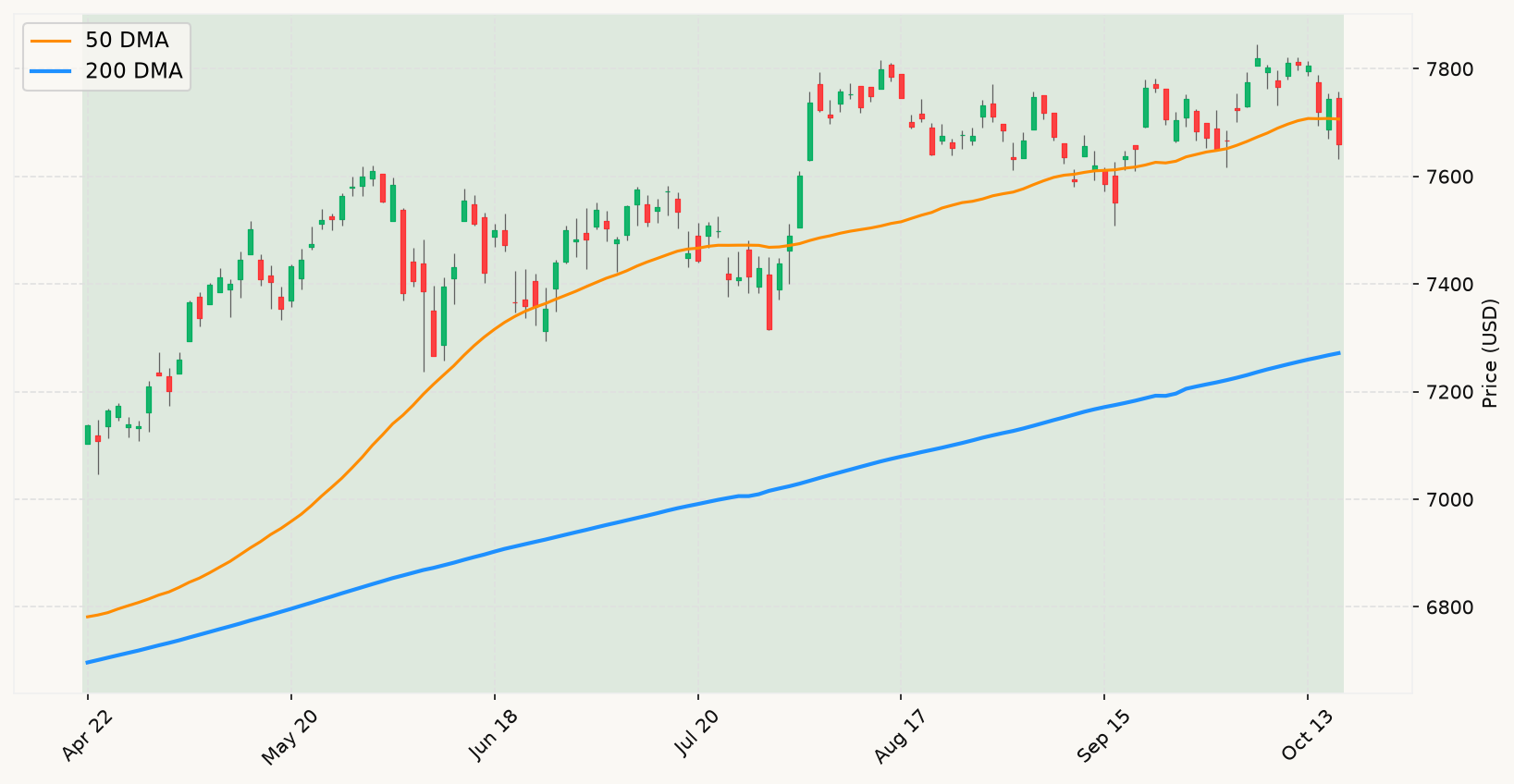
The dominant story this week — the violent selloff in semiconductor and AI-linked stocks — is generating a lot of narrative heat, but the framework here is straightforward: noise until proven otherwise. The chip sector has shed over $1 trillion in market cap across eight straight losing sessions, which sounds alarming but needs to be placed in the correct context. The S&P 500 sits comfortably above its primary market trend, meaning the bull market regime is intact. A sector-level rout, even a dramatic one, is not a signal of a systemic break when the broad index is holding its ground above that critical long-term trend line. What we're seeing is sector-specific fear, not an economy-wide repricing event.
The velocity profile reinforces the noise verdict. The drawdown from the recent all-time high is just over 2% — nowhere near the 15% threshold that would trigger the fast-crash pattern, and nowhere near the prolonged, grinding character of the four historical recessionary bears. The 80% base rate applies here in spirit even before the market has declined 10%: nearly every episode that felt like the beginning of something serious at this stage of a correction turned out to be a routine pullback. The counterintuitive lesson from 45 years of data is that the declines that feel most frightening — sharp, violent, headline-grabbing — are statistically the ones that resolve quickly. Selling into this kind of fear has historically been one of the most expensive mistakes an investor can make.
The economic signal picture — the second leg of any legitimate bear market diagnosis — also isn't cooperating with the bear case. Employment conditions remain firmly healthy, monetary policy signals are bullish in the sense that while the Fed is hiking, it is doing so against a backdrop of genuine economic strength, not ahead of a slowdown. The interest rate environment, with a positively sloped spread between short and long-term rates, is not flashing the kind of inversion that has reliably preceded every modern recession. What we have is a central bank fighting real inflation in a growing economy — a very different beast from the credit-crunch environment that precedes deep bear markets. The AI debt-financing concerns that spooked chip investors are worth monitoring as a potential leading indicator of tightening financial conditions, but they are a data point to watch, not a confirmed signal.
The posture this framework calls for is clear: stay fully invested. The primary market trend is bullish, the economic indicators are not converging on contraction, and the velocity profile of this decline is consistent with the vast majority of historical episodes that recovered without becoming prolonged bears. The AI earnings gauntlet this week could produce volatility in either direction — but the framework treats that as noise rather than signal. What matters is what the market does with its primary trend over the next several weeks, not whether any single earnings report produces a good or bad day. If you are sitting on the sidelines waiting for clarity, the historical evidence says you are more likely to miss the recovery than to time a further decline. MoreLess