The Ticker Analysis
Chip Panic Is Noise — Stay the Course
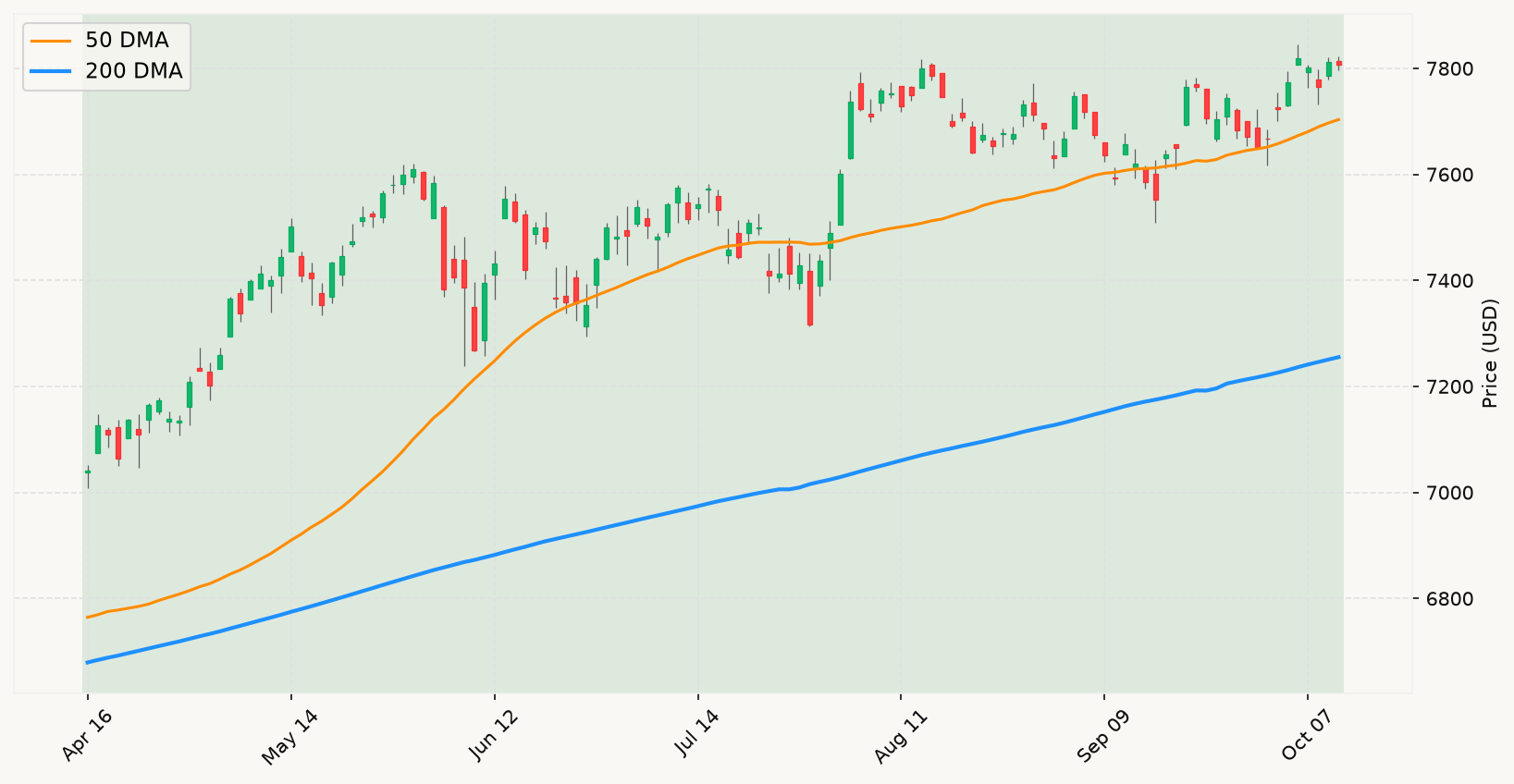
The China CXMT semiconductor story is the noisiest story of the morning, and it's worth being precise about what it actually is. A Chinese chipmaker claims to have made progress on a denser memory architecture — an announcement that is, by the company's own framing, unverified and forward-looking, targeting a product launch by year-end. The market reaction in Asian chip names was severe, but severe reactions to competitive threat headlines from China's semiconductor sector are a recurring feature of this cycle, not a new signal. Nothing about CXMT's announcement moves any needle that matters for broad market direction. The stock market trend is firmly bullish, the index sits within a hair of all-time highs, and no economic indicator is flashing deterioration. A sector-level selloff driven by a single company's conference presentation is noise — textbook noise — and the market's historical record is unambiguous that reacting to it is the wrong move.
Bank earnings this morning present the same kind of bifurcated picture that often characterizes mid-cycle reporting seasons. JPMorgan's miss is getting the headline, but Goldman's blowout on equities trading, Citigroup's services momentum, and UnitedHealth's raised guidance collectively paint a picture of an economy still generating corporate profits at a solid pace. JPMorgan's CFO flagging deal delays is worth noting as a leading-edge observation about deal activity in a high-rate environment — but it's a data point in an evolving story, not a recessionary signal. The 80% base rate says that absent confirmed recession, the overwhelming likelihood is that any market softness resolves. Nothing in today's bank reports changes that calculus. Corporate earnings are a lagging indicator at the best of times; what matters is whether the broad economic machinery is intact, and every real-time indicator on the dashboard says it is.
The IMF's Global Financial Stability Report warning about AI leverage, spiking bond yields, and cyberattacks lands as high-quality noise. The Fund is doing its institutional job — identifying tail risks and urging policy vigilance — but its track record as a market-timing instrument is poor, and the framework is explicit that news, even authoritative institutional news, is priced in by the time it's public. The IMF's specific concern about AI sector leverage and a potential correction is worth filing under "things to monitor if the primary market trend begins to deteriorate," not "things to act on today." The current interest rate environment is unambiguously elevated, and rates staying higher for longer is a real constraint on valuations and deal flow. But the stock market has been digesting this reality for months, and it continues to trend above its long-term average — which is the only verdict that matters for positioning.
The Trump-Putin diesel deal is a geopolitical event with direct inflation implications — oil prices fell Tuesday on the news, which modestly reduces the near-term upward pressure on CPI. Whether it actually delivers meaningful supply relief is a separate question; analysts are skeptical, and Russia's export capacity constraints are real. But directionally, any easing in energy prices is a mild positive for the inflation outlook and, by extension, for the interest rate environment. Wednesday's CPI print is the real event risk this week. A hot number would reinforce higher-for-longer Fed thinking and put additional pressure on rate-sensitive equities; a tame number would provide relief. Either way, with the primary market trend intact and no economic indicators converging toward recession, the prescribed posture remains fully invested. The current drawdown from all-time highs is negligible, the velocity of any decline is nowhere near the threshold that triggers defensive consideration, and both growth nowcasts are comfortably positive. There is nothing here that changes the regime. MoreLess