The Ticker Analysis
All-Time Highs Still in Charge — Headlines Are Noise
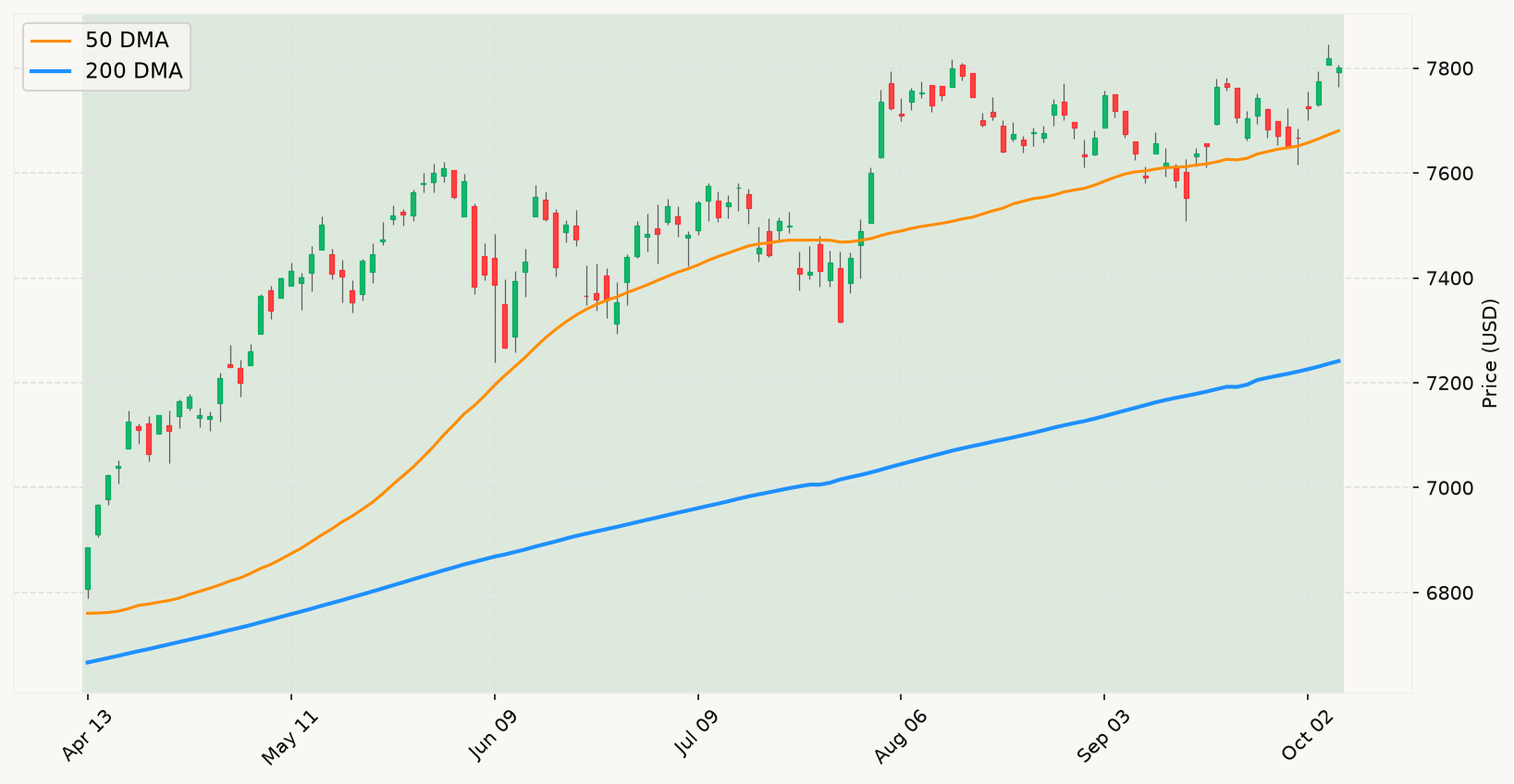
The noise machine is running at full volume today — oil spikes, geopolitical fire, hawkish minutes, multi-decade yield highs. From a purely analytical standpoint, none of this changes the core read on the equity market's primary trend, which remains firmly bullish. The S&P closed at a new all-time high just two days ago, and the current drawdown from that peak is negligible — well under 1%. A market sitting within a fraction of a percent of its all-time high is not sending a distress signal. It is confirming that the primary uptrend is intact. Every piece of scary headline content this morning has to be weighed against that fundamental fact: the market itself, in aggregate, is not behaving like a market that is discounting a serious deterioration in conditions.
The Fed minutes are signal or noise? Noise. Not because the policy path is unimportant in the abstract, but because the market already knew the Fed was hawkish — it literally just hiked — and the minutes confirmed nothing that wasn't already in the price. The committee split between supply-shock hawks and demand-side hawks is an interesting internal debate, but it resolves to the same place for investors: rates stay elevated, another hike is possible by December, and monetary policy remains the tightest it has been in years. The interest rate environment is restrictive and the yield curve has normalized. That's a headwind for duration-sensitive assets. It is not, on its own, a recession signal. The 10-year/3-month spread is firmly positive, meaning the monetary policy signal has moved from recessionary inversion territory to a configuration that has historically accompanied continued growth.
The Iran-oil shock deserves more careful treatment. A genuine supply disruption through the Strait of Hormuz would be an inflationary macro event — it raises input costs, complicates the Fed's path, and could weigh on corporate margins. That matters. But here's the discipline the data demands: oil price spikes driven by geopolitical fear, absent confirmed demand destruction or a recession-triggering fiscal shock, have historically been noise in the equity framework. The market is a real-time aggregator of exactly this kind of risk. If institutional capital genuinely believed a catastrophic oil disruption was imminent and persistent, the S&P would not have been printing all-time highs 48 hours ago. The employment conditions picture remains healthy, the nowcasts are solidly positive, and the stock market trend is pointing up. None of the recession convergence criteria are blinking red simultaneously.
The positioning guidance is straightforward: stay fully invested. The 80/20 base rate is not even in play here — the market has not declined 10% from its peak, meaning this barely registers as a pullback, let alone a correction. Samsung's record AI-chip earnings and PepsiCo's beat-and-guide both reinforce that corporate fundamentals are holding up. The instinct to react defensively to surging oil and hawkish Fed language is understandable emotionally — but that instinct, applied reflexively, is exactly the behavior that costs investors the most over long horizons. The framework's prescription at all-time highs with positive growth signals and healthy employment conditions is unambiguous: enjoy the ride, resist the noise. MoreLess