The Ticker
Bull Market
The economic engine is purring like a well-fed cat in a sunbeam — oil fires and rate jitters are rattling the windows, but the bull is still very much in charge of the pasture.
Top Story
Oil Tops $101 as Iran Attacks Rattle Markets at Record Highs
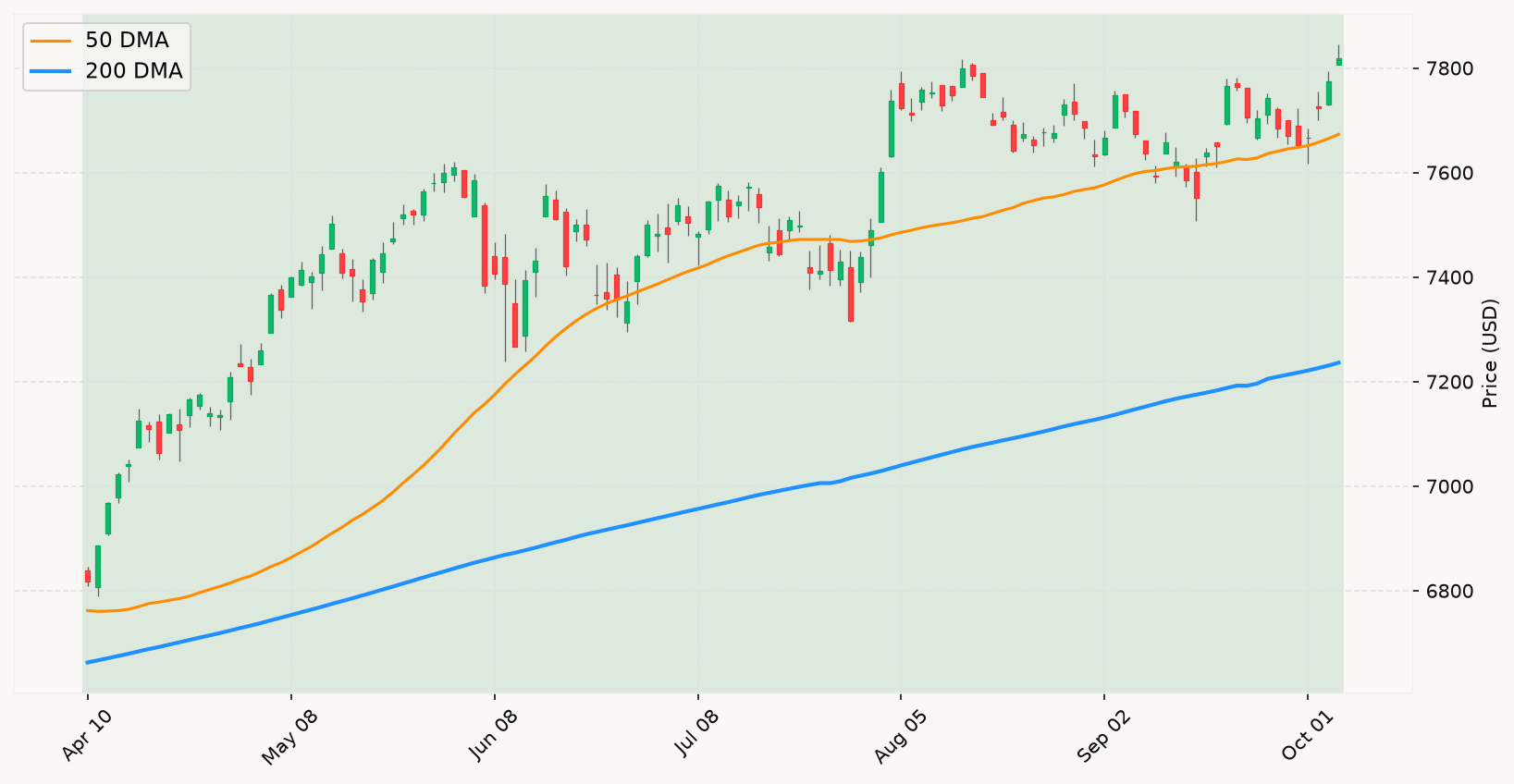
The S&P 500 closed at an all-time high yesterday, but Wall Street is pulling back this morning as Iran's renewed attacks on shipping vessels in the Strait of Hormuz sent oil above $101 a barrel, renewing fears about inflation and the global energy supply just as investors had been feeling good about the economy.
The timing couldn't be more loaded: Q3 earnings season kicks off tomorrow with PepsiCo and Delta Air Lines, followed by the big Wall Street banks the following week. Analysts are expecting roughly 29.5% year-over-year earnings growth for the S&P 500 — what would be the eighth straight quarter of double-digit gains — and in a break from the usual script, estimates were actually revised higher during the quarter rather than trimmed. AI infrastructure investment, with hyperscaler capex up over 100% year-over-year, is the dominant engine powering those results.
On the Fed front, the FOMC minutes from the September 15–16 meeting drop at 2:00 p.m. today, covering the unanimous 25-basis-point hike to 3.75–4.00% that surprised many in the market. But the data since that meeting has told a different story: core PCE for August came in softer than expected at 3.0%, and September payrolls were a stark miss at just 29,000 — sending the probability of another October hike from roughly 70% to around 20%. Markets are now largely pricing a hold at the October 28 meeting.
The macro backdrop is a study in contradictions. The Atlanta Fed's real-time growth model pegs Q3 GDP near 3.7% annualized — a healthy clip — while energy costs from the ongoing Iran war are reintroducing inflationary pressure that the Fed thought it was taming. Rising Treasury yields are squeezing rate-sensitive tech valuations, government borrowing costs are climbing, and the 10-year term premium has hit its highest level in 12 years. The bull market remains firmly intact, but the agenda for the weeks ahead — earnings, the Fed, and oil — is anything but quiet. MoreLess
Six Month Chart (SPX)
⊞ Expand
The Ticker Analysis
All-Time Highs Mean Stay in the Game
The headline risk today — Iranian attacks lifting oil above $101 a barrel — is worth understanding in context rather than reacting to in a panic. Energy disruptions from the ongoing Strait of Hormuz crisis are a genuine macro headwind: they feed inflation, pressure consumer spending, and complicate the Fed's path. But the stock market's own verdict on all of this is clear. The primary market trend is unambiguously bullish — the S&P 500 closed at a new all-time high just yesterday. When the market itself is making record highs, the correct posture is to stay fully invested. All-time highs are not a warning signal; the historical evidence is emphatic that new highs are associated with above-average forward returns, not exhaustion. Today's futures dip is a blip against that backdrop, not a signal.
The FOMC minutes dropping today at 2:00 p.m. are also likely to read as largely stale. The September hike is old news, and the data since — a notably weak September payroll print of just 29,000 jobs and softer-than-expected core PCE — has already dramatically repriced October hike odds lower. Markets are roughly 80% priced for a hold at the October 28 meeting. What matters for equities isn't the minutes themselves but the broader interest rate environment trajectory: the tightening cycle appears to be approaching its ceiling, and futures are not pricing aggressive hikes deep into 2027. A rate environment that stabilizes at current levels is not the kind of grinding deterioration in leading economic indicators that historically precedes recessionary bear markets. It's discomfort, not danger.
The earnings setup entering this season is exceptional by any historical measure. A consensus expectation of roughly 29.5% year-over-year earnings growth — the third straight quarter above 25% — with estimates that were actually revised upward during the quarter, not downward, speaks to corporate America's resilience. AI infrastructure capex surging triple digits year-over-year is generating real earnings power for the technology and semiconductor complex, and broad sector participation in growth means this isn't a one-trick pony rally. None of this is a reason to chase individual names; the evidence on stock-picking odds remains unfavorable and the concentration of outperformance in a tiny number of names argues strongly for index exposure. But it is a reason to stay invested and let the bull market work.
Stepping back from today's noise: every signal in the current diagnostic framework points the same direction. The primary market trend is in confirmed bull territory. Employment conditions, while showing some softness in the latest payroll print, have not triggered recessionary alarm bells. Real-time growth models remain solidly positive. The interest rate environment, while tighter than a year ago, reflects a Fed that is nearly done hiking — not one beginning a cycle of aggressive tightening into a contracting economy. The four prolonged bear markets since 1980 all required a confirmed recession to fully develop. Nothing in the current data convergence looks like that setup. The noise is loud; the signal is unchanged. Stay invested. MoreLess