The Ticker Analysis
Stay Invested — The Signal Is Still Green
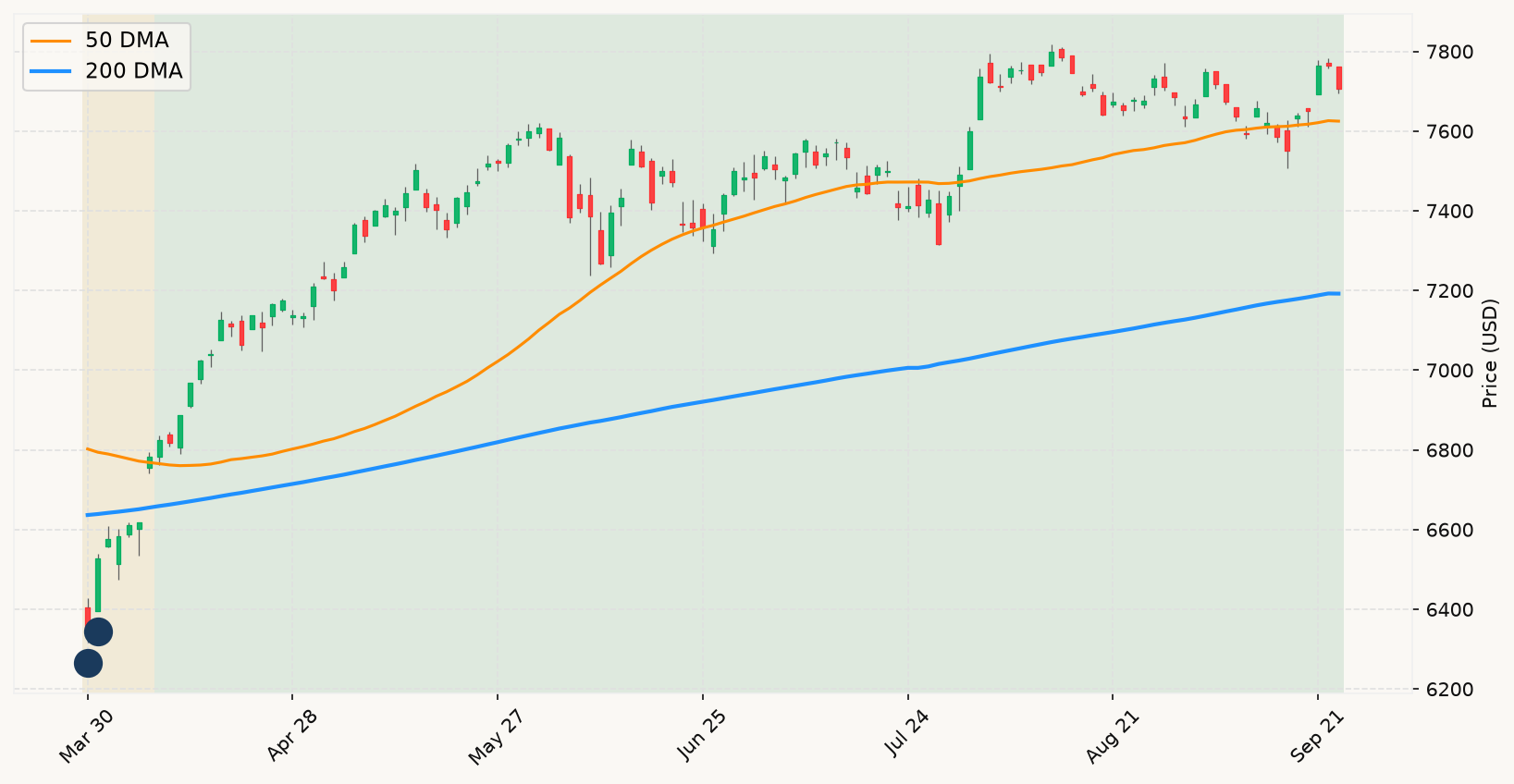
The two biggest stories moving markets today — the Trump-Xi summit and the surge in long-term Treasury yields driven by a scorching PMI report — are both worth examining carefully before reacting. Start with the Xi summit. Trade diplomacy generates enormous headline noise, and the instinct to read every development as a buy or sell trigger is understandable. But from a signal-versus-noise standpoint, the trade truce extension is a status quo outcome — not a structural deterioration. The market's primary trend remains intact and well above its long-run benchmark. Nothing in today's diplomatic choreography changes that picture. This is noise dressed up in a tuxedo.
The yield spike is the more interesting development. The combination of a blowout PMI, a poorly-received Treasury auction, and hawkish Fed commentary pushed long-term yields to levels not seen since 2007. That's a significant move, and it's tempting to treat it as a recession omen — but the logic actually runs in the opposite direction here. Yields are rising because the economy is too strong, not because it's collapsing. Manufacturing is surging, new orders are building, and the Atlanta Fed's growth tracker is running hot. The interest rate environment has shifted toward more tightening, but the underlying macro signal is expansion, not contraction. Labor market conditions remain solid. There is no convergence of deteriorating leading indicators pointing toward recession — which is the only configuration that historically has turned a correction into a prolonged bear market.
The Iran war and its effect on oil prices is the wildcard that deserves the most ongoing attention. Energy-driven inflation is exactly the kind of persistent external shock that can keep the Fed tighter for longer and eventually squeeze the consumer. But "eventually" is doing a lot of work in that sentence. Markets have been digesting triple-digit oil prices for months, and the primary stock market trend has held above all major trend benchmarks. The market — with all its collective intelligence from institutional participants tracking this situation in real time — has not broken down. Until it does, the analytical posture is to treat energy volatility as a headwind, not a wrecking ball.
Zooming out: the S&P 500 sits about 1% below its all-time high set just six weeks ago, comfortably above its long-run primary market trend, with RSI in neutral territory, a positively sloped interest rate environment, healthy employment conditions, and GDP tracking well into positive territory from both major nowcast models. The 80/20 historical base rate — that the vast majority of market pullbacks resolve without becoming prolonged bear markets — applies in full force here. There is no second-leg recession signal converging with the current mild pullback. The correct posture remains fully invested, with vigilance on oil prices and the Fed's response function as the primary risk threads worth watching. Capitulating to the headline noise would be a classic, expensive mistake. MoreLess