The Ticker Analysis
Noise Dominates, But the Trend Holds Firm
The headline event of the week is the Fed's first rate hike since 2023, and the verdict from a signal-versus-noise standpoint is straightforward: this is noise for the purpose of long-term positioning. The market saw this move coming with near-certainty, and equity-index futures climbing in the aftermath of the decision — with the S&P 500 advancing on the day — is exactly the kind of outcome that should be expected when a priced-in catalyst lands without a negative surprise. The hawkish dot plot gave markets momentary pause, but the price action spoke: no breakdown, no panic, no sustained selling. The market absorbed the news and moved on. That is not the behavior of a market sniffing out a recessionary bear.
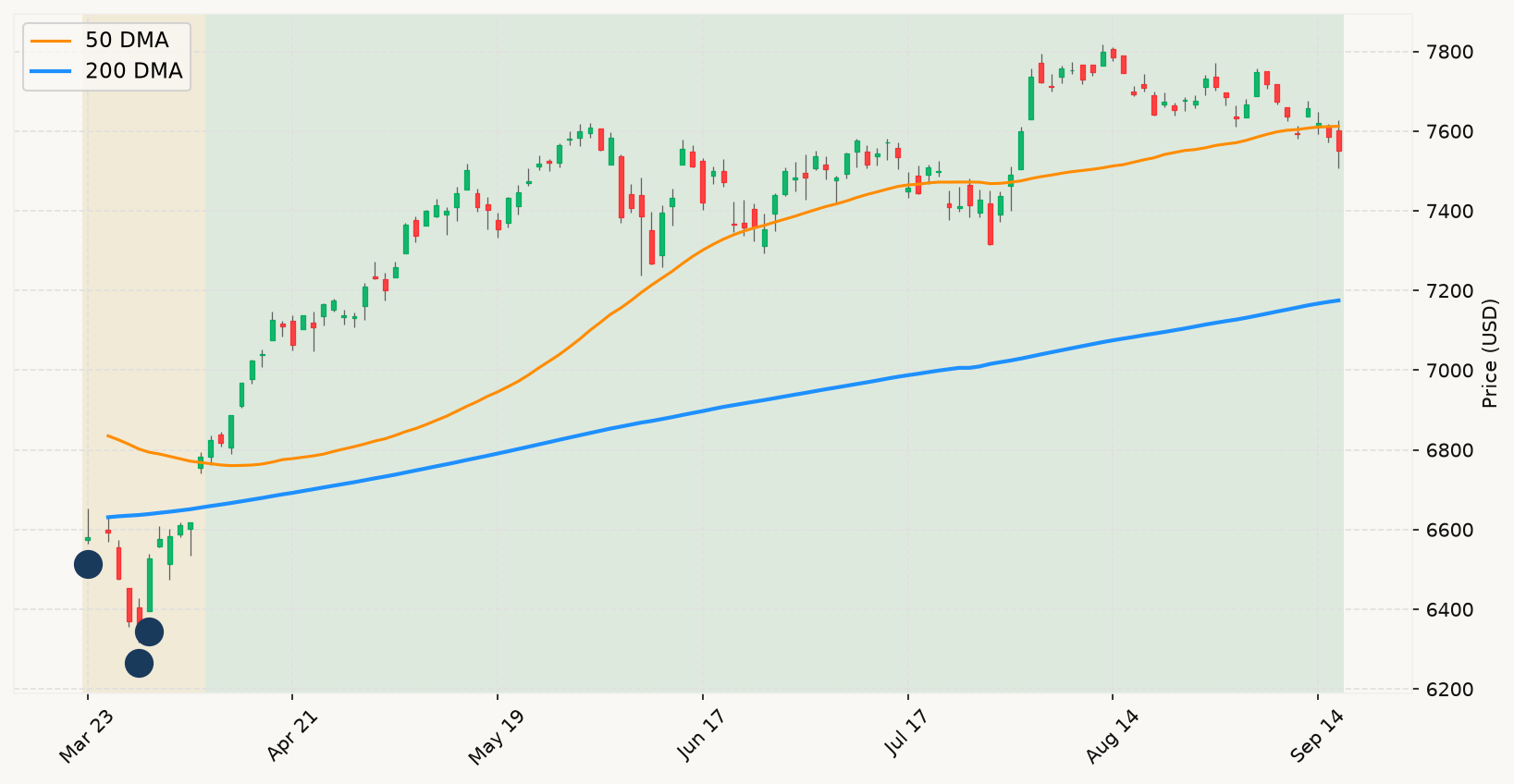
Stepping back from Wednesday's drama, the primary market trend is the most important data point on the board. The S&P 500 is comfortably above its long-term trend line, and nothing from this week's FOMC decision changes that. A rate hike cycle that the market fully anticipated, backed by a still-expanding economy — with growth nowcasts running well above stall speed on both major real-time trackers — does not constitute the grinding, deteriorating price action that historically precedes a prolonged bear. The drawdown from the all-time high remains modest and has been slow, not fast. The three-month window on velocity is still open, and the base rate — 80% of the time, declines of this profile resolve without becoming something worse — argues heavily against defensive repositioning.
The Generac-Amazon data center deal is colorful corporate news, and the AI power infrastructure theme it represents is genuinely interesting. But from a framework standpoint, single-stock moves and sector narratives carry no diagnostic weight for portfolio positioning. The question that matters is whether any of the core leading indicators — employment conditions, monetary policy signals, real-time growth, and the market trend itself — are converging toward a recessionary signal. Right now, they are not. Employment conditions remain firm, the interest rate environment is restrictive but orderly, growth is running meaningfully above zero, and the primary market trend is intact. All four signals would need to deteriorate simultaneously to move the needle. None of them are doing that.
The Iran conflict and oil prices above $100 per barrel are the most credible structural risk in the current environment. Energy-driven inflation is what forced the Fed's hand, and a prolonged war scenario could keep price pressures elevated and force additional hikes into 2027. That is a risk worth monitoring — but monitoring through the lens of what it does to the leading indicators, not through the lens of the headline. If oil sustains above $120 and the labor market begins softening in response, those would be signals to track. Today, they are not. The interest rate environment is tightening, but it is tightening into a growing economy with a healthy job market and a trend-following stock market. The correct posture remains fully invested, with eyes on the indicators, not the headlines. MoreLess