The Ticker Analysis
Geopolitical Noise, Not a Bear Signal — Stay the Course
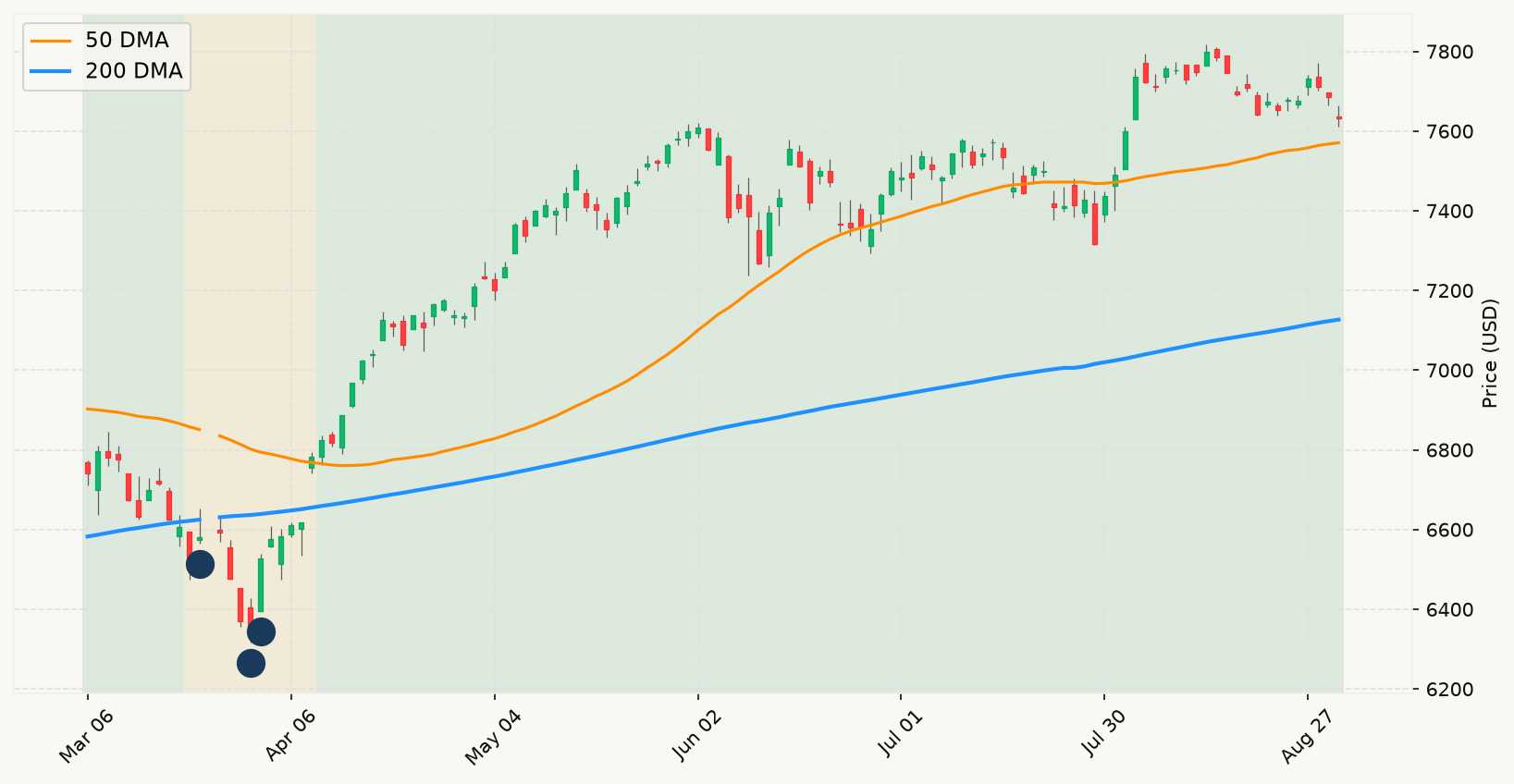
The dominant story right now is the U.S.-Iran escalation and its knock-on effect on oil prices and global bond yields — and from a purely market-structure standpoint, it has the fingerprints of a geopolitical sentiment event rather than a recessionary signal. The S&P 500 is sitting comfortably above its primary market trend, the economy is tracking solid growth, labor conditions remain healthy, and the drawdown from the all-time high is a modest 2.15%. That's not a bear market setup — that's a bull market dealing with a noisy headline. Geopolitical shocks that don't coincide with simultaneous deterioration across leading economic indicators have a consistent historical track record: they create violent short-term turbulence and then resolve. The 2020 COVID crash, the 1990 Gulf War spike, the various Middle East flare-ups across the last 45 years — none became prolonged bear markets absent a confirmed recession. The current geopolitical risk absolutely deserves monitoring, but the actionable signal isn't here yet.
The more interesting near-term variable is the Fed pivot toward hiking. Chair Warsh's Jackson Hole remarks and the subsequent chorus of hawkish Fedspeak have repriced September meeting odds dramatically in a matter of days. A rate hike from 3.50%–3.75% into an oil shock is the kind of policy combination that historically stresses market multiples — and it's worth watching closely. But here's the critical distinction: the interest rate environment moving from "cut expectations" to "hike expectations" is a compression of multiple expansion, not a recession trigger on its own. The four prolonged bear markets in modern history were driven by recessionary contractions — the dot-com earnings collapse, the 2008 credit implosion, the 1981–82 inflation bear, and the 2022 tightening cycle. A single quarter-point hike into a still-expanding economy with a positive interest rate spread between the 10-year and 3-month Treasuries is a headwind, not a death knell. The monetary policy signals bear watching, but they're not flashing red.
The bond market selloff deserves specific attention because it's happening simultaneously in the U.S., Japan, Germany, and France — a coordinated global repricing of sovereign debt that the market is framing as an inflation resurgence story. That's a meaningful development, and it's already doing some of the Fed's tightening work through higher mortgage rates and credit costs. But again, the question the framework demands is whether this convergence of pressures — the oil shock, the hawkish Fed, the global yield surge — is translating into deteriorating leading economic indicators. Right now, the growth nowcasts are firmly positive, labor markets are solid, and the interest rate spread remains positively sloped. Convergence hasn't happened. Two or more leading indicators moving simultaneously toward contraction is the threshold — and that threshold hasn't been crossed.
The positioning implication is straightforward: stay fully invested. The market is in a confirmed uptrend, the velocity of the current drawdown is gentle (barely 2% from the all-time high over 20 days), and none of the recession confirmation signals have fired. The August payrolls report on Friday is the next pivotal data point — a genuine miss could start to move the needle on labor conditions, which would be worth taking seriously. But absent that, the appropriate response to this week's headlines is the same one that has been correct 80% of the time across 45 years of market history: do nothing, let the noise run its course, and resist the urge to trade geopolitics. The bulls are still in charge of this tape. MoreLess