The Ticker Analysis
Stay Invested — The Bull Case Hasn't Broken
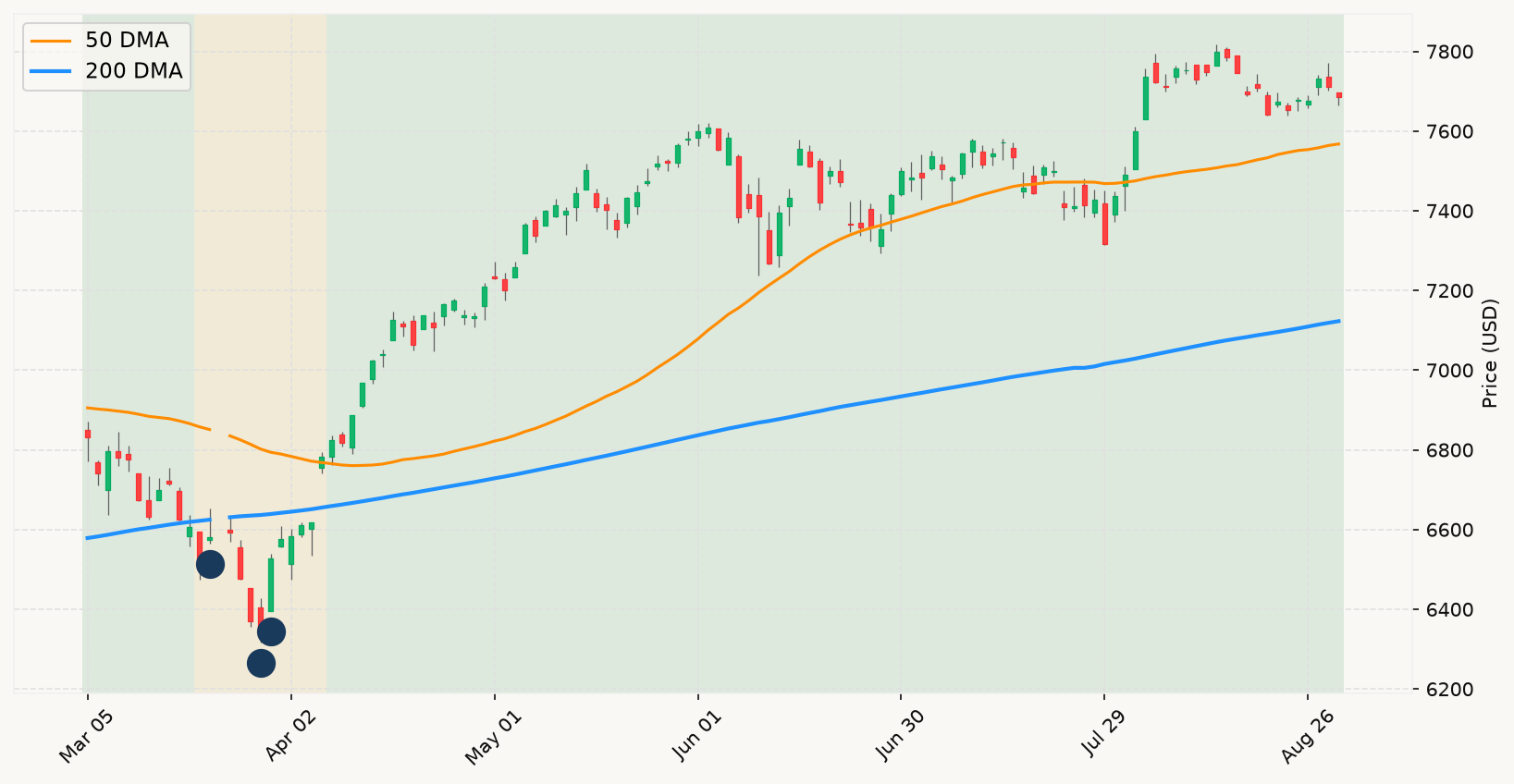
The headline story this morning is renewed tanker attacks in the Strait of Hormuz, and the immediate market reaction — equity futures lower, oil higher — is exactly what you'd expect. Before reacting, though, run it through the lens that actually matters: does this move any diagnostic needle? The primary market trend remains firmly bullish. The S&P sits well above its long-term trend line, and the most recent all-time high was struck less than three weeks ago. A conflict that has been grinding for six months is already priced into this market. The incremental escalation overnight is noise layered on top of a known risk, not a new systemic discovery. The market's relative resilience near all-time highs — despite six months of active U.S.-Iran hostilities — is itself a signal. If this geopolitical backdrop were going to break the bull trend, it would have done so already.
The Warsh Jackson Hole pivot is the more substantive development. A hawkish Fed chair pushing rate hike odds above 65% for September changes the interest rate environment in a meaningful way — bond markets reacted swiftly, and that pressure is real for duration-sensitive equities. But here's the framework's verdict: a rate hike, or even a modest tightening cycle, does not automatically constitute a recession signal. The four prolonged bear markets in the modern data set — 1981–82, 2000–02, 2008–09, and 2022 — all involved confirmed or imminent recessions. Tighter policy is a headwind, not a funeral bell. Watch whether it translates into deteriorating labor market signals or a sustained rollover in leading economic indicators. Right now, employment conditions remain in the bullish column. Until that changes, a rate hike is context — not a sell signal.
Nvidia's blowout quarter deserves a frank assessment: spectacular earnings from an individual company are explicitly on the "things to ignore" list for purposes of tactical positioning. Whether Nvidia beats by 5% or 15% tells you nothing reliable about where the S&P 500 is headed over the next twelve months. What it does confirm is that the AI infrastructure buildout remains in acceleration mode, which supports the broader earnings backdrop. The more useful observation is that the S&P completed August near all-time highs even as Treasury yields surged — that is the market's actual verdict on the macro situation, and historically, markets printing new highs under conditions of elevated yields have continued to deliver above-average forward returns. The sell-the-all-time-high instinct is one of the most reliably wrong impulses in investing.
Positioning guidance here is straightforward: stay fully invested. The current drawdown from the August 13 all-time high is trivially small and well within the range of routine noise that happens in every bull market year. The velocity diagnostic isn't close to triggering — there's no fast-crash pattern, no sustained breach of the primary trend. Monetary policy signals have tightened, but the interest rate environment alone has never been sufficient to flip the framework's ruling. The convergence test — where multiple leading indicators deteriorate simultaneously alongside a grinding market decline — is simply not in evidence. September tends to be seasonally soft, and the geopolitical backdrop will generate alarming headlines. Treat both as the background noise they are, and let the primary trend do its job. MoreLess