The Ticker Analysis
Bulls Hold the Line Despite Geopolitical Fire
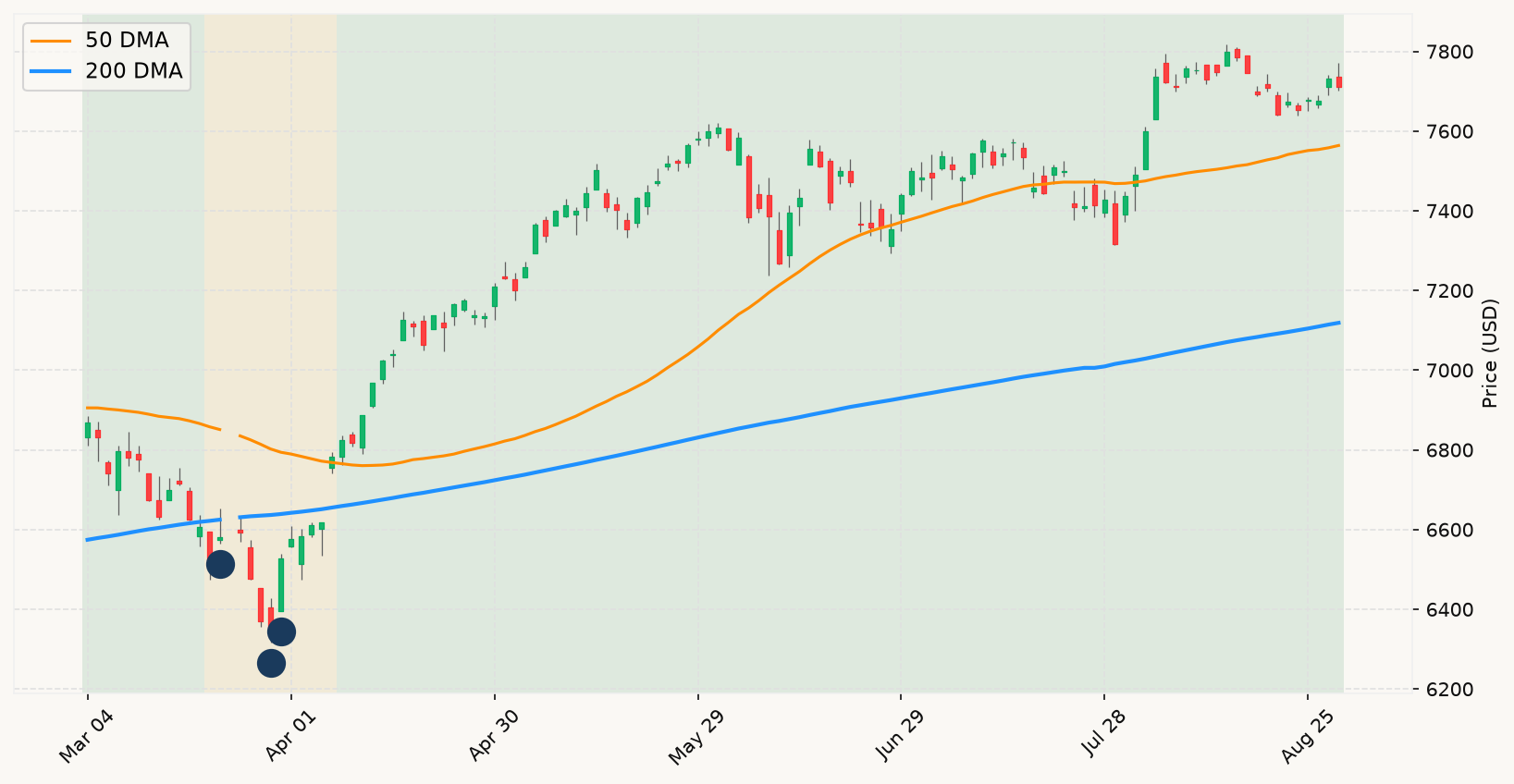
The dominant headline today is an active shooting war over a global energy chokepoint, and equity futures are softening in response. This is exactly the kind of scary, visceral news story that tends to trigger emotional decision-making — and exactly where historical evidence argues most forcefully for discipline over reaction. The primary market trend remains firmly bullish: the S&P 500 is trading comfortably above its long-term trend line, just 1.1% from an all-time high set less than three weeks ago. No technical signal of trend deterioration is present. The geopolitical noise is real, but the market's verdict — a modest pullback rather than a violent breakdown — is itself informative. When genuine systemic risk is repriced, markets don't merely dip; they grind relentlessly lower over weeks and months. What we're seeing this morning looks like a fear-premium response to a discrete event, not the early tremors of a structural bear.
The Warsh Jackson Hole speech is the other major catalyst, and the market's reaction deserves a careful read. A Fed chair signaling that more tightening may be needed is, on its face, a headwind for equities — particularly rate-sensitive growth stocks. But the interest rate environment, while tighter than many hoped, is not flashing a recession warning. The 10-year/3-month spread remains in positive territory at +83 basis points, meaning the curve has not inverted — the single most reliable monetary signal for an impending economic contraction. Warsh's hawkishness is a policy risk worth monitoring, but a positive spread means the classic pre-recession alarm bell has not rung. Heightened rate-hike odds are noise until the curve inverts and holds there.
Nvidia's $96 billion quarter, more than doubling year-over-year, is a data point that matters in a specific but limited way here. Strong earnings are a lagging signal; the framework explicitly treats them as already priced in. What matters more is what this result tells us about the broader economy: AI-driven capital expenditure by the largest technology companies is accelerating, not plateauing. Hyperscaler CapEx approaching $800 billion in 2026 represents a massive ongoing investment cycle. Recessions don't typically begin when the largest corporate spenders in the economy are ramping, not cutting, their buildout commitments. Combined with employment conditions that remain firmly healthy and a primary market trend that is solidly intact, the macro backdrop does not fit the profile of an economy rolling over into contraction.
The bottom line is straightforward: nothing on today's tape — the Hormuz escalation, the hawkish Fed chair, the oil spike — moves any needle that the analytical framework watches for a genuine bear market signal. The market is above its primary trend, the economic leading indicators are not converging on recession, and the current drawdown of just over 1% from the all-time high is categorically not a signal of any kind. The correct posture is fully invested. That said, a week with ISM PMIs and the August jobs report ahead means volatility is likely to remain elevated. Investors who feel the urge to act should recognize what that impulse is: a response to headlines, not evidence. The framework says stay the course, and the evidence backs it up. MoreLess