The Ticker Analysis
Bull Market Intact — Geopolitical Noise, Not Signal
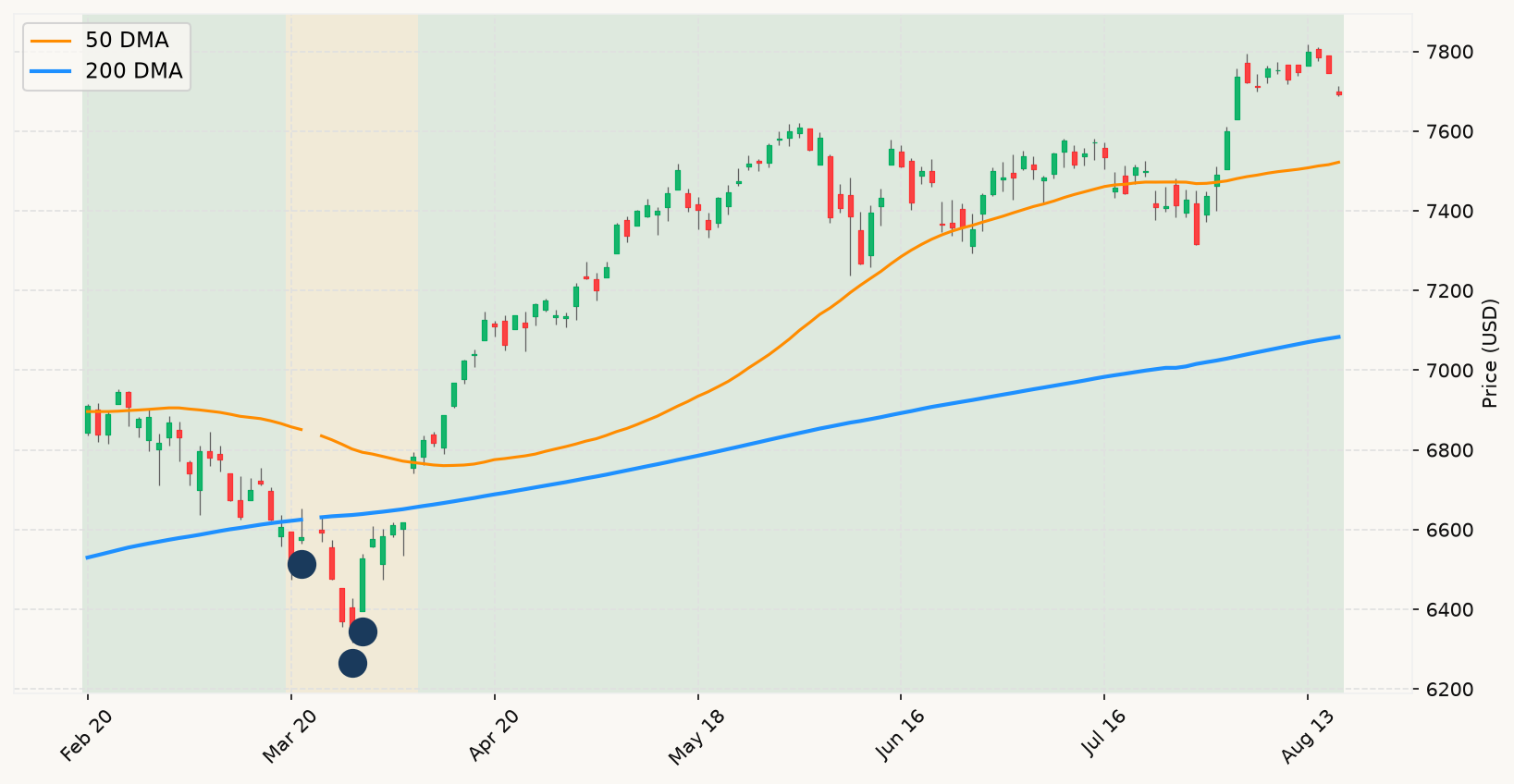
The Canada tariff pause is noise, not signal — and the market's muted reaction this morning confirms it. A three-day delay on $20 billion in imports, with a deal that remains unsigned and a Prime Minister who publicly hedged on its completeness, is not a macro turning point. What matters is what the market is doing in aggregate, and the primary market trend remains unambiguously bullish — price is holding well above the long-term trend line that separates bull regimes from bear regimes. A pullback of roughly 1.4% from last week's all-time high is statistical background radiation. It does not register in any diagnostic framework as a warning. Investors tempted to read geopolitical drama as a sell signal should remember: the market is a real-time aggregator of every known risk, including the Iran stalemate, the tariff back-and-forth, and the bond vigilantes. If these were genuinely threatening the expansion, the tape would look different than it does.
The bond market is the most legitimate source of near-term friction, and it deserves a clear-eyed assessment. Long yields at multi-decade highs — with the 30-year touching levels not seen since 2007 — do create valuation headwinds for growth and rate-sensitive sectors, and the chip sector's recent underperformance reflects exactly that repricing. But elevated long yields in the context of a positively-sloped interest rate environment and a hold-steady Fed are not the same thing as monetary policy tightening into a weakening economy. The spread between long and short rates remains positive, employment conditions remain solid, and the Fed's own statement acknowledged that economic activity is expanding at a solid pace. The three dissenting votes for a hike at the July meeting are worth watching in the minutes today — if the hawks are gaining ground internally, that shifts the rate path calculus — but a hawkish lean from a few dissenters in a growing economy is a far cry from the kind of policy mistake that historically precedes recessionary bears.
The Iran situation and oil above $91 are generating headlines, but their market impact should be evaluated through the same lens: does this move any recession indicator toward convergence? Not yet. Oil-driven inflation complicates the Fed's path, but it does not by itself collapse consumer spending or corporate margins quickly enough to trigger the kind of slow, grinding equity deterioration that characterizes the early stages of a recessionary bear. The sharp sell-off in Korean semiconductors — KOSPI down over 5% — is a volatility event in a market with its own idiosyncratic exposures, not a signal about U.S. economic fundamentals. Fast, sharp declines in individual markets or sectors are historically the kind of moves that resolve, not escalate. The base rate strongly favors patience over reaction.
The earnings picture reinforces the bull case. With Q3 and Q4 expected to deliver 20%-plus profit growth and the majority of S&P 500 sectors tracking double-digit gains, the fundamental support beneath equity prices is real. Merck's blockbuster cancer drug result is a reminder that genuine innovation continues to drive upside surprises. The correct posture remains fully invested. The market is near all-time highs, above its primary trend, supported by positive employment conditions and a growth-expanding economy — all four of the major recession indicators would need to deteriorate simultaneously before the diagnostic shifts. None of them is flashing red today. Stay the course, tune out the noise, and let the market do its work. MoreLess