The Ticker Analysis
New Highs, Real Noise — Stay the Course
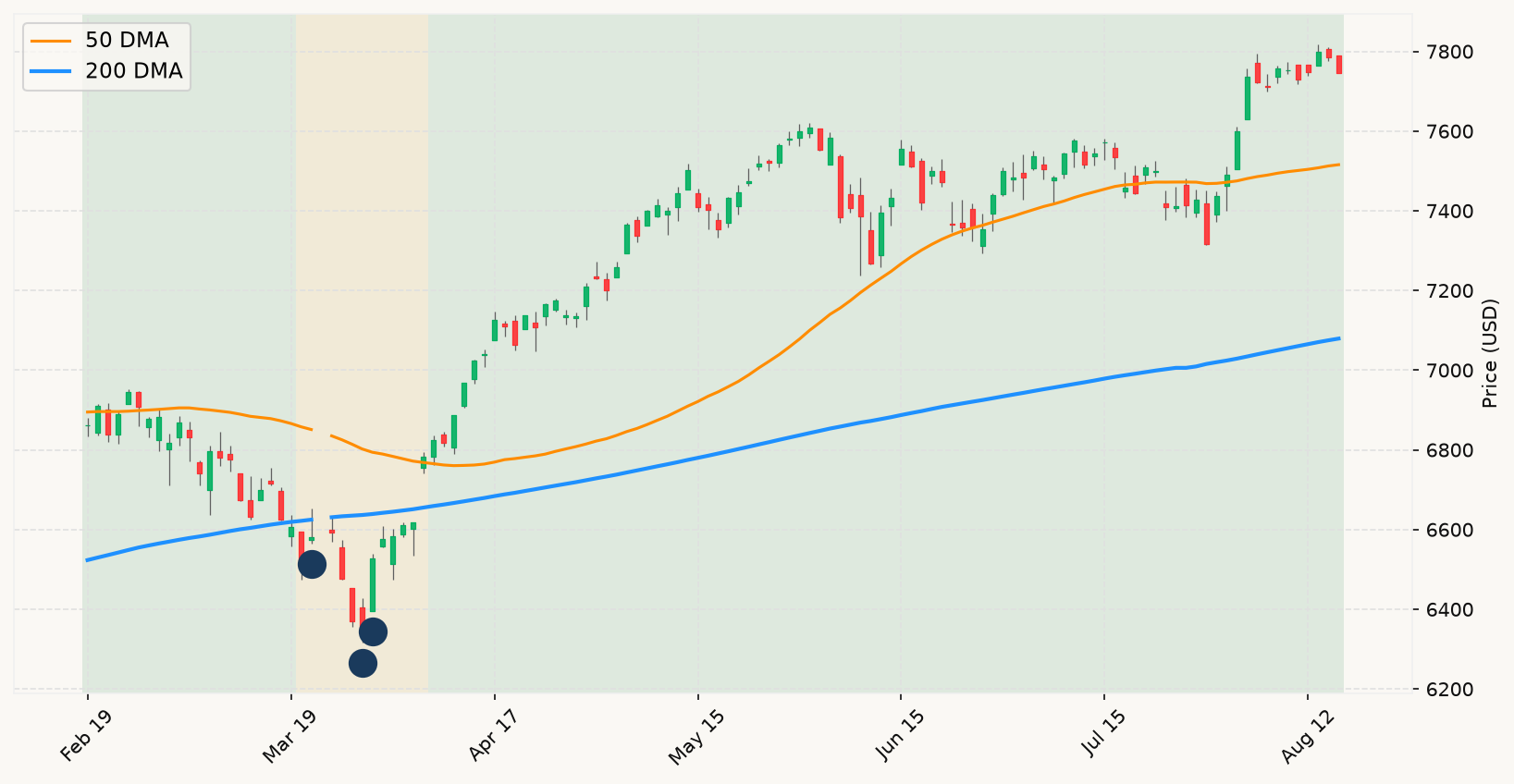
The primary market trend is unambiguously bullish. The S&P 500 set a new all-time high just five days ago and remains comfortably above its long-term trend line. History is clear on this point: new all-time highs are not danger signals — they are green lights. The forward return data across decades of market history shows that starting points at all-time highs have consistently outperformed all other entry points over one, three, and five-year horizons. Today's Iran-driven oil spike and the semiconductor selloff are generating genuine headline noise, but noise is precisely what they are. The market's job is to aggregate risk in real time, and right now the aggregate verdict — expressed in where prices actually sit — is constructive. A half-percent pullback from a record close is not a warning. It is Tuesday morning.
The FOMC split and the upcoming July minutes deserve a clear-eyed ruling: noise. The Fed held rates steady, three members dissented in favor of a hike, and markets are now repricing September expectations. None of this changes the primary trend diagnostic. The interest rate environment has been a source of friction for over a year, and yet the market has continued to make new highs. The minutes may reveal more hawkish internal language, and that could produce a knee-jerk reaction on Wednesday — but a reaction to minutes is not a signal. What matters for positioning is whether the economic expansion is cracking, not whether a given FOMC member preferred a 25-basis-point hike last month. Employment conditions remain healthy by every leading measure available. The labor market is not flashing the kind of deterioration that historically precedes a prolonged bear market.
Home Depot's beat this morning — with revenue topping estimates and full-year guidance reaffirmed — is a useful real-world data point, but even strong earnings should not drive positioning decisions. Earnings are a lagging signal; they tell you what happened, not what is coming. What is worth watching in this week's retail prints is not the EPS numbers themselves, but any commentary on forward demand, foot traffic trends, and management's read on the consumer heading into the back half. The CFO's characterization of a "frozen housing market" is a reminder that the high-rate environment is still exerting real friction on rate-sensitive sectors, even as the broader tape holds up. If Walmart and Target confirm consumer resilience on Thursday, that removes one potential catalyst for a more meaningful drawdown.
The semiconductor selloff and Iran-driven oil surge are the two most emotionally salient stories today, and both deserve the same treatment: skepticism. Fast, sentiment-driven moves in individual sectors and commodity markets routinely generate outsized headlines while producing zero lasting impact on the primary trend. The relevant question — always — is whether any of today's developments materially shifts the recession probability. The interest rate environment shows a positively-sloped term structure, employment conditions are healthy, and the market itself just printed a new high five sessions ago. Not one of the leading convergence signals is deteriorating in a way that demands defensive action. The correct posture here is fully invested, watching the data, and resisting the pull of narratives that feel urgent but move no diagnostic needle that matters. MoreLess