The Ticker Analysis
All-Time Highs Are the Signal — Everything Else Is Noise
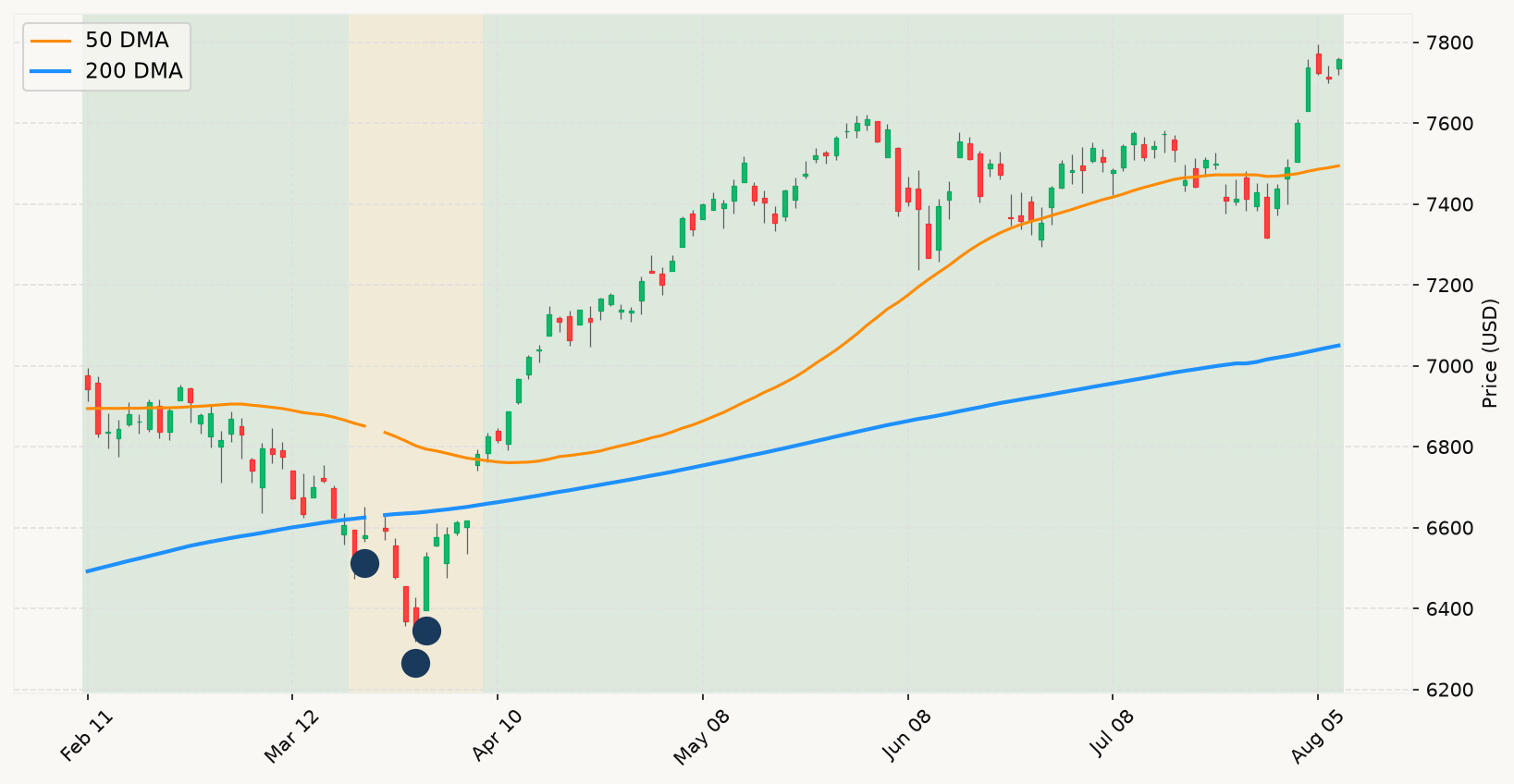
The primary market trend is emphatically bullish — the S&P 500 just closed at a fresh all-time high — and that is the single most important piece of information on the board right now. All-time highs are not a warning; historically they are associated with above-average forward returns across one, three, and five-year horizons. The Hormuz crisis, the Fed's hawkish-versus-dovish tug-of-war, the Intel dilution trade, the AMD selloff despite record earnings — none of this has been enough to break the tape. When the market keeps making new highs in the face of genuine macro headwinds, the correct interpretation is not "the market is ignoring danger." It is "the market's collective intelligence has weighed these risks and decided they are not fatal." That verdict deserves serious respect.
The Strait of Hormuz situation is worth contextualizing carefully. It is real, it is disruptive, and energy cost pressures flowing from it have kept inflation uncomfortably elevated — the annual rate sat at 3.5% in June and is expected to remain well above the Fed's 2% target in July's forthcoming print. But the market has been trading through this crisis for six months and is sitting at record highs. That is the most direct signal available: this geopolitical shock has been absorbed, repriced, and digested by the most sophisticated capital in the world. It belongs in the "noise, already priced" category until and unless the primary trend breaks — which it has not. Oil volatility bears watching as an input into inflation expectations, but it is not a signal to act on in isolation.
The jobs shock and the resulting repricing of September Fed odds is more interesting from a framework perspective — not because soft labor data is bullish in itself, but because of what it means for the interest rate environment. The 10-year yield has pulled back, the 3-month-to-10-year spread remains positive, and monetary policy signals are now tilting back toward accommodative. None of the leading economic indicators are converging toward recession. The nowcast models are deeply positive. Employment conditions, while wobbling with one weak payroll print, have not deteriorated in the systematic, three-month-average way that historically accompanies a genuine labor market downturn. One bad jobs number is noise. A trend of deteriorating payrolls accompanied by a breaking primary trend would be something different — and we have neither right now.
The AI earnings bifurcation — Shopify rewarded, AMD punished despite strong results — is the kind of narrative that generates a lot of commentary but zero actionable framework signal. Individual stock reactions to earnings are explicitly outside the scope of what drives durable market-level conclusions. The S&P 500 as a whole continues to climb; sector rotation and stock-specific dispersion within a bull market are routine features of the tape, not warning signs. The correct posture here is fully invested. The data does not support defensiveness. Stay the course, let this week's inflation prints and earnings flow in, and resist the temptation to mistake noisy headlines — however genuinely dramatic — for signal. The burden of proof falls on the bear case, and right now, the bear case has nothing to show. MoreLess