The Ticker Analysis
Bull Market Intact — Geopolitics Is Just Noise
The dominant story lifting futures this morning — Trump's last-minute pivot from military strikes to diplomacy on the Strait of Hormuz — is exactly the kind of headline that feels earth-shaking and proves to be noise for equity investors. Geopolitical developments like this one can move oil prices dramatically in the short run, and they did, but the stock market's primary trend has been grinding higher all year regardless of the conflict backdrop. Nothing about a ceasefire announcement or a diplomatic opening changes the structural underpinnings of the bull market. The market already priced in significant geopolitical risk premium during the escalation phase; the unwind of that premium is now a tailwind, not a new signal. Ruling: Noise, with a bullish tilt for the session.
Apple's post-earnings selloff is a classic case of composition disappointment — the high-margin services line missed, while lower-margin hardware beat, and investors repriced the earnings quality accordingly. A 7%-plus single-session drop in the world's largest company by market cap grabs headlines, but stock-specific reactions to earnings — even at Apple's scale — don't move the framework's needles. The primary market trend remains solidly bullish, and Apple's idiosyncratic miss does nothing to change the aggregate picture. Broader earnings season is running well, and that's what matters. If anything, the market's ability to absorb a major Apple stumble without broad index damage would be a constructive sign of underlying breadth. Ruling: Noise.
The Fed's 9-3 hold last week deserves more careful attention than the others. Three dissents in favor of a hike is unusual, and Warsh's deliberate ambiguity about forward guidance has injected real uncertainty into the September meeting outlook. Investors are now pricing meaningful hike probability by year-end. But here's the key distinction: a rate hike, or even a hiking cycle, doesn't automatically become a bear market catalyst. The interest rate environment is restrictive but not inverted in the 10-year/3-month configuration — the spread remains positive — and employment conditions remain firm per the official statement. For a rate environment to threaten the primary trend, you'd need to see it feeding through into recession-level deterioration in growth and labor data. That's not what the current picture shows. The Fed's hawkishness is worth monitoring, but it doesn't flip the posture. Ruling: Watch, not act.
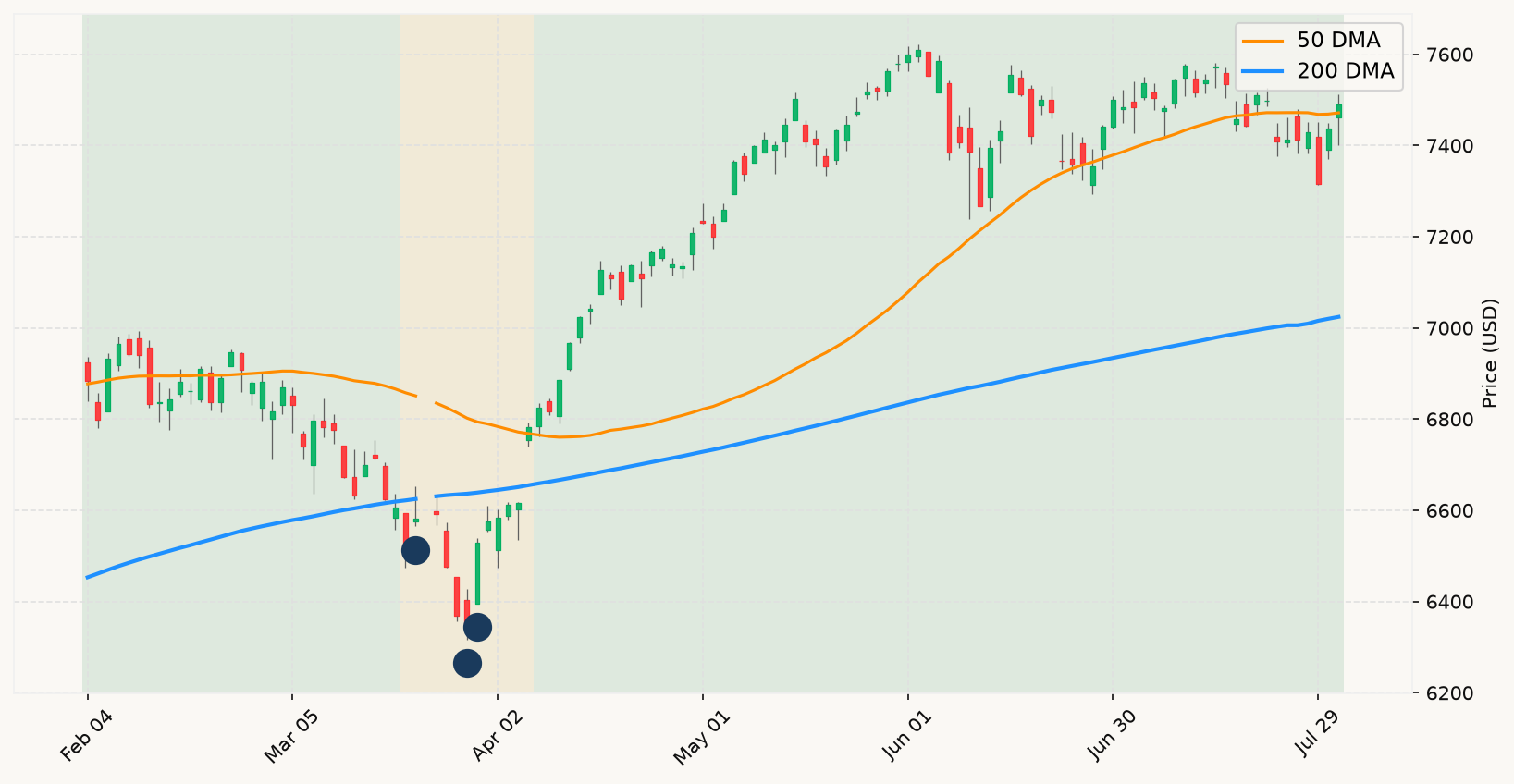
Putting it all together, the current setup maps cleanly to the most benign cell of the diagnostic: the market is comfortably above its primary trend, the all-time high was set just two months ago with a drawdown of under 2%, and none of the leading economic indicators are signaling convergent deterioration. Both growth nowcasts are firmly positive, labor conditions are stable, and the monetary policy backdrop — while tighter than anyone would like — is not yet printing the kind of inversion or demand destruction that precedes real trouble. The week ahead brings jobs data and Jackson Hole on the near-term horizon, and Warsh's comments there could matter. But until the primary trend breaks and economic signals start to converge on the downside, the correct posture is fully invested. The burden of proof remains entirely on the bear case, and nothing in today's news package comes close to meeting it. MoreLess