The Ticker Analysis
Bull Market Intact — Fear Is the Noise, Not the Signal
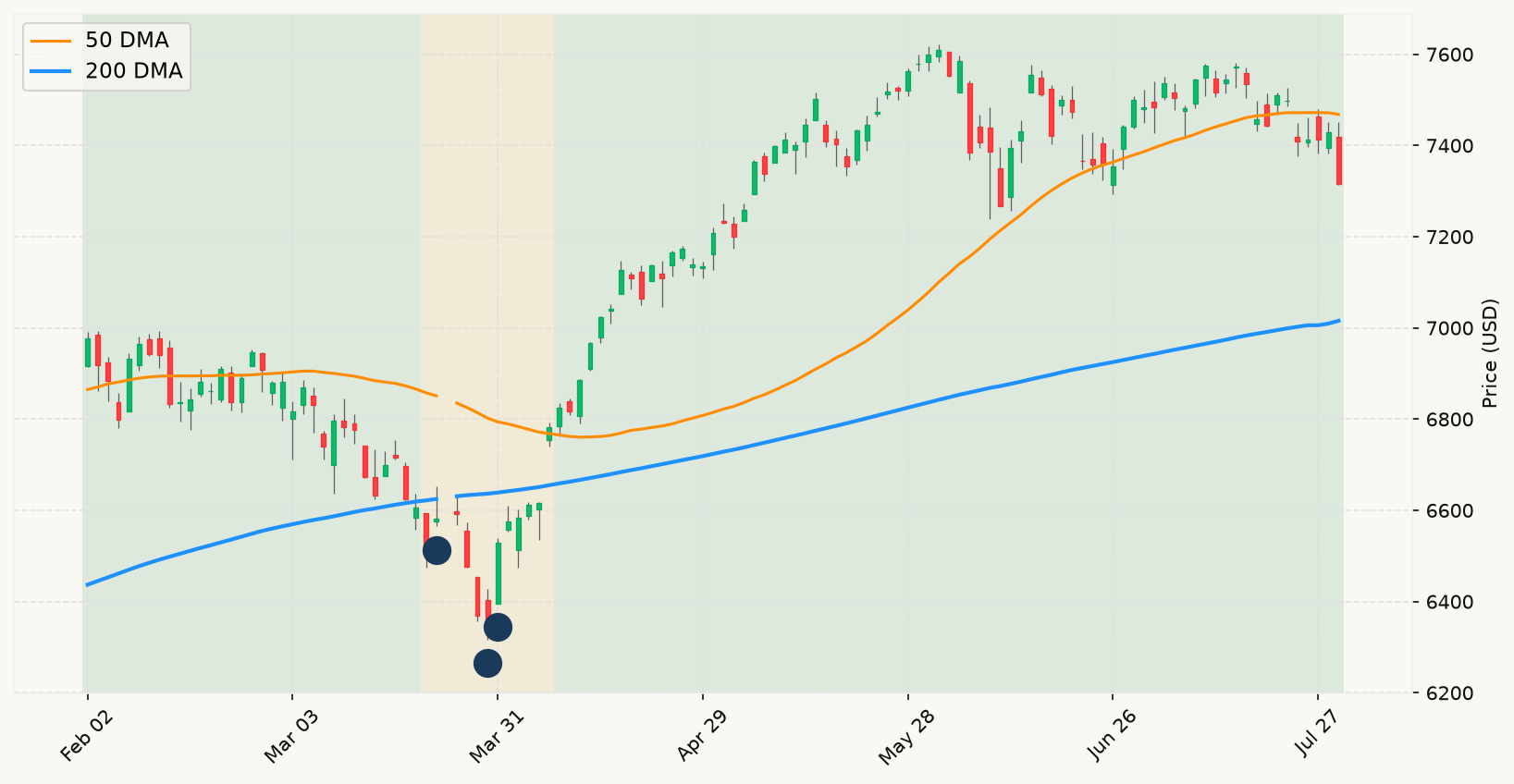
The headline grabbing all the attention is the Fed's 9-3 hold — the most divided FOMC vote in nearly a decade — with three hawks wanting to hike immediately amid persistent above-target inflation. The bond market's reaction was the tell: long-duration Treasuries sold off hard, with 30-year yields hitting their highest levels in nearly two decades. For equity investors, the instinct is to treat this as alarming. The evidence says otherwise. The stock market trend remains firmly intact — price is well above the long-run primary trend line, confirming the dominant regime is still bullish. A divided Fed is noise. A hawkish surprise that lifts long yields is noise. Neither moves the two signals that actually matter: the primary trend and the leading recession indicators. Right now, both remain constructive.
The earnings tape this week is exactly what you'd expect from a healthy bull market in mid-cycle: a mixed bag of beats and misses, amplified by AI capex anxiety. Microsoft's Azure acceleration and record annual revenue are real; Meta's free cash flow collapse is real too. But trying to trade the market off individual earnings reactions is precisely the kind of noise-chasing the data consistently punishes. What matters at the aggregate level is that roughly one-third of the S&P 500 is reporting this week, and the broad corporate earnings picture remains intact. The elevated capex debate — Alphabet, Meta, Microsoft all spending at historic rates on AI infrastructure — is a legitimate long-run question, but it is not a recession signal, and it does not alter the primary market trend one basis point.
The geopolitical situation — active U.S. military strikes on Iran, Iran vowing retaliation, Strait of Hormuz tension — is the kind of story that feels like it should matter more than it does in the data. Here's the historical record: geopolitical shocks that don't tip economies into recession resolve without becoming prolonged bear markets. Every time. The market has been aware of this conflict for months; it is not a surprise. The correct question isn't "is this scary?" — it's "does this move the recession probability dial?" The answer, based on available leading indicators, is: not materially. Employment conditions remain solid, the interest rate environment shows a positive spread between the 10-year and 3-month, and growth — while decelerating — is still positive. None of the four recession confirmation signals are converging.
The current posture is straightforward: the market is above its primary trend line, the drawdown from the all-time high is modest and well within the range of routine mid-year turbulence, and none of the macro recession signals are lighting up simultaneously. The 80% base rate argues strongly that this is a correction within an ongoing bull market, not the early innings of a prolonged bear. Wednesday's selloff — driven by a hawkish Fed read, Meta's capex disappointment, and geopolitical noise — is the kind of session that historically marks a buying opportunity rather than a warning. Stay invested, tune out the headlines, and let the primary trend do the work it has always done. MoreLess