The Ticker Analysis
Noise Is Deafening, Signal Still Says Stay In
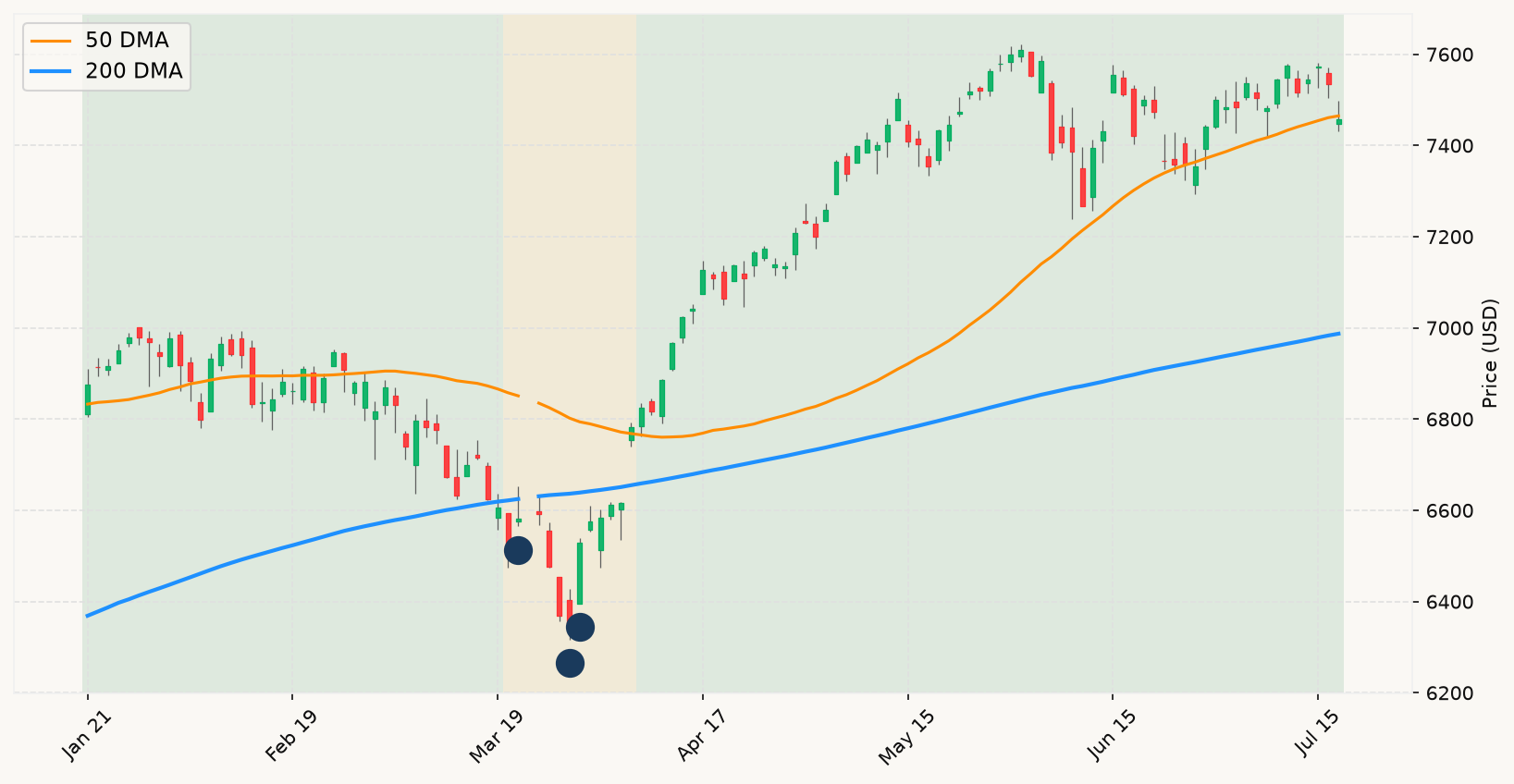
The dominant theme this week is a rapidly escalating U.S.-Iran military conflict now in its ninth consecutive day, paired with a semiconductor sector that has entered technical bear market territory following a sharp rotation out of AI-related names. Both stories are loud, both are generating alarming headlines, and both deserve the same response from a disciplined investor: calm. The broader market is trading well above its primary market trend — the stock market trend is firmly bullish — which means the default posture is fully invested. Nothing in the current news flow changes that regime classification. Geopolitical shock events have a remarkably consistent historical track record: they produce fear, they sometimes produce sharp short-term selling, and they almost never become the fundamental cause of a prolonged bear market absent an accompanying recession. The market is telling you the same thing: equities are off their all-time high by roughly 2%, not 20%.
The semiconductor selloff warrants more nuance but ultimately the same conclusion. The Philadelphia Semiconductor Index is down over 20% from its June peak — painful for anyone concentrated in that sector — but the broader equal-weighted market is actually up slightly over the past month, a clear signal that this is a sector-specific valuation reset, not a systemic market breakdown. The Chinese Moonshot AI model that rattled chip stocks is classic "news as noise": by the time it's widely reported, sophisticated institutional money has already priced whatever incremental information it carries. More telling is that TSMC just reported a 77% jump in quarterly profit and the stock still sold off — that's crowded positioning unwinding, not a collapsing earnings cycle. The AI infrastructure buildout remains structurally intact, and hyperscaler earnings from Alphabet this week will be the real test.
On the macro front, the interest rate environment carries the most genuine diagnostic weight right now. The 10Y-3M spread is positive and widening — a clean, uninverted curve that is the opposite of what preceded every modern recession. The Fed's hawkish tilt and the market's pricing of a possible July hike reflect sticky inflation, not economic deterioration. Meanwhile, employment conditions remain healthy: no labor market distress signal has fired. The Atlanta Fed GDPNow has the current quarter tracking positive growth, as does the NY Fed's model. Both nowcasts positive, no yield curve inversion, no labor market deterioration — you need convergence across multiple deteriorating signals to get a recession call, and you simply don't have it. The geopolitical risk premium in oil prices is real, but the historical evidence is clear that oil spikes driven by Middle East conflict resolve faster than consensus fears, and the energy sector's relative strength this week reflects that the market is already making that trade.
The positioning prescription is straightforward: stay fully invested. The panic fast-crash signal is not active — the drawdown from the all-time high is minimal — and the velocity diagnostic doesn't come into play at all until you're looking at a much steeper and faster decline. The week ahead is actually a constructive setup: a heavy earnings slate from major tech companies that, if they deliver, could arrest the semiconductor rotation and re-anchor sentiment. The noise level is high — Iran airstrikes, chip headlines, Fed speculation — but the signal from what the market is actually doing remains bullish. Broad diversification across the full market index, rather than concentrated sector bets in either direction, is the right posture for capturing whatever this week delivers. MoreLess